
- Home
- Flooring & services
- Hardwood flooring
Hardwood Flooring in Reno & Sparks, NV
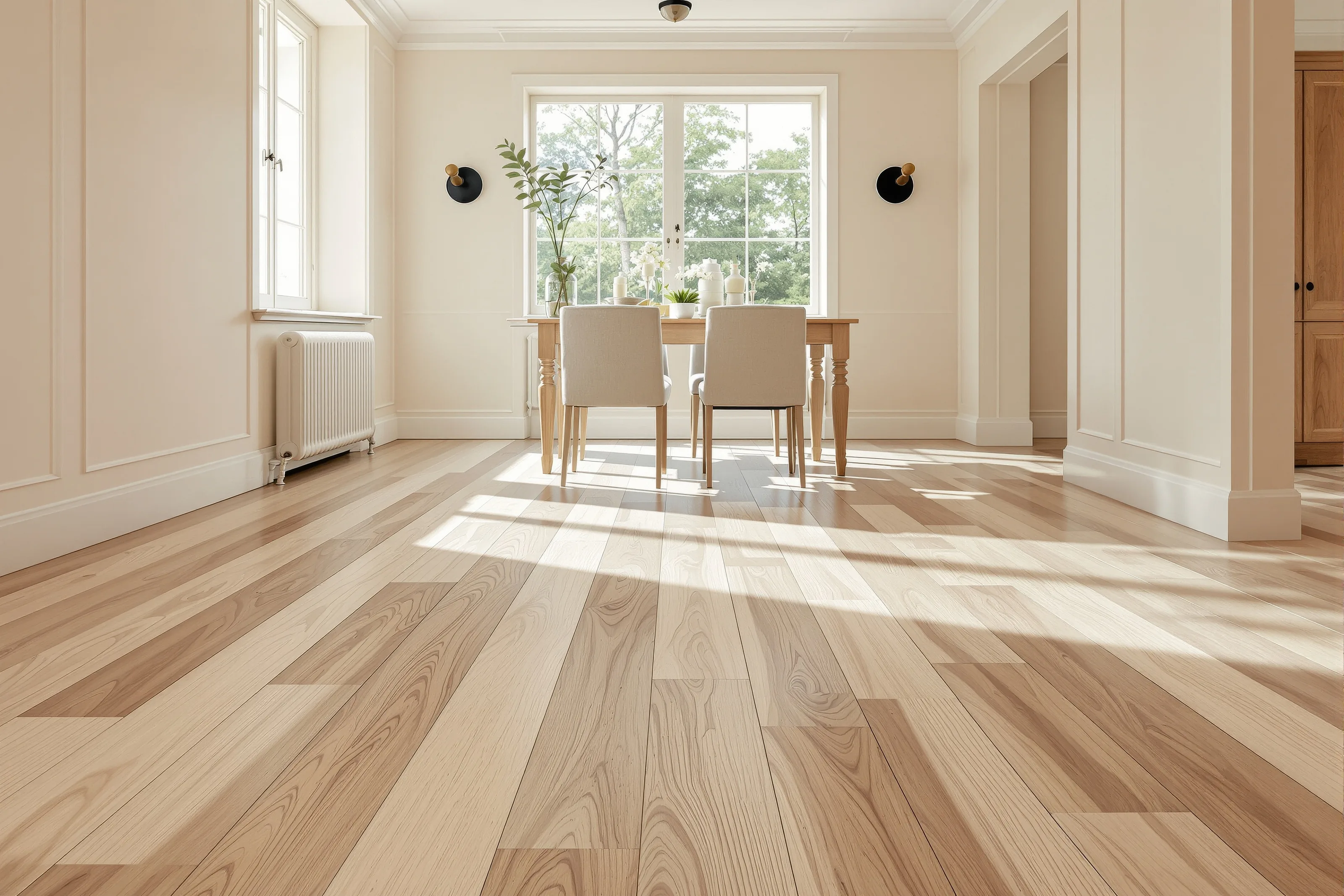
White oak, walnut and hickory, in wide plank or herringbone, chosen for your light and installed for the high desert. The floor a house keeps.
Is hardwood the right floor for a Reno home?
Yes, in most rooms, if the wood is chosen for dry air and installed after it has settled into the house. Reno sits at 4,404 feet in high desert, where the air is very low in humidity through summer and moderately low in winter. Wood gives up moisture in that air and shrinks a little across its width. That is not a flaw; it is why species, cut, plank width and construction get decided together.
The National Wood Flooring Association puts the target for wood floors at 30 to 50 percent relative humidity, and a heated Northern Nevada house can sit under that in winter, so we measure the house before ordering wood. A floor planned for that reality stays tight and quiet; one planned for a catalogue photo does not.
What you get with a Step With Trish hardwood floor
Species, cut, width, finish and pattern, decided in your rooms.
Species and cut chosen for the light
White oak takes a matte finish and reads calm in strong afternoon sun. Walnut goes deep and warm in a north-facing room. Hickory hides a busy household. Rift and quartersawn boards show straighter grain and move less than plainsawn, so the floor suits your light and stays flatter through a dry winter.
Solid or engineered, decided by the house
Solid hardwood can be sanded repeatedly and belongs on a wood subfloor above grade. Engineered hardwood is a real wood face on a layered core that resists the shrink and swell of dry air, the safer choice for wide planks, slabs and radiant heat. We tell you which your rooms call for, so you get the longer-lived floor.
A finish that fits how you live
Hardwax oil sits in the grain and can be spot-repaired where a chair scrapes. A matte or satin lacquer seals harder and wipes clean behind dogs and children. Every wood shifts tone in sunlight, and a UV-inhibiting finish slows that. You get the finish that fits your pets, your traffic and your patience.
Patterns, and where hardwood belongs
Straight lay along the long wall stretches a room; herringbone or chevron gives a kitchen a floor worth looking down at. Hardwood belongs in living rooms, bedrooms, halls and most kitchens. It does not belong in a full bath, a laundry, a mudroom that takes snowmelt, or below grade; there we point you to luxury vinyl plank.
How a hardwood floor comes together
Three steps, the same people at each one.
- Step 01
Consult
We come to the house, look at the rooms in their own light, check what the subfloor is made of, ask about pets and radiant heat, and read the humidity the house holds. Then we narrow the samples to two or three boards.
- Step 02
Design
We draw the floor as one plan: species, plank width, which way the boards run, where a herringbone field starts and stops, how each doorway transitions. Finish and sheen are settled against your paint and cabinetry before we order.
- Step 03
Install
The wood is delivered once the house holds normal living conditions and rests there until its moisture is within range of the subfloor. Subfloor flattened, rows laid from the center line, edges scribed, nosings fitted. The floor is finished the way it was drawn.
What makes a Step With Trish hardwood floor different?
We say no to the wrong wood
If a plank is too wide for the species, or solid wood is the wrong call for a slab or a dry room, we say so before you fall for the sample. A floor that stays flat beats one that photographs well on day one.
The people who chose it see it installed
There is no handoff between a sales floor and a crew. The people who helped you pick the board plan the layout and check the moisture reading before the first row goes down.
Acclimation is not skipped to hit a date
Wood that goes in before the house and the boards agree will gap or cup later. We schedule delivery around the reading, and tell you plainly if that moves the install.
What changes the price of a hardwood floor
We measure the rooms, check the subfloor and settle species, finish and pattern with you, then send one written quote for the whole floor.
- 01
Species, cut and plank width
Species sets the starting point; rift and quartersawn cost more than plainsawn, and wide planks cost more than narrow strip and ask for a steadier house.
- 02
Construction and finish
Engineered boards vary in the thickness of the wood face and the core. Site finishing adds sanding and drying days; prefinished boards move that cost into the product.
- 03
Subfloor preparation
Leveling compound, plywood over a slab, moisture barriers or pulling old glue-down flooring all add labor before a board is laid. How we prepare a floor explains what we look for.
- 04
Stairs, patterns and transitions
Herringbone and chevron take more cutting and more waste than a straight lay. Stair treads, nosings, borders and transitions into tile or carpet are fitted by hand.
Questions Reno homeowners ask about hardwood
Do hardwood floors gap in winter in Reno?
Yes, a little; wood shrinks as heated winter air pulls moisture out of it, and small seasonal gaps are normal in a dry climate. Holding the house near the 30 to 50 percent relative humidity the National Wood Flooring Association recommends, and choosing narrower or engineered boards, keeps them small.
What is the difference between solid and engineered hardwood?
Solid hardwood is one piece of wood through its full thickness; engineered hardwood is a real wood face bonded to a layered core. Solid can be refinished more times and belongs above grade on a wood subfloor; engineered moves less with humidity, which suits wide planks, slabs, radiant heat and dry climates.
Can hardwood floors be installed over radiant heat?
Yes, with the right product and preparation; engineered hardwood is the usual choice because its layered core handles the heating cycle better than solid wood. Run the system before installation so the subfloor is dry and stable, and change the temperature gradually afterward.
Are hardwood floors a good choice for homes with pets?
Yes, if you choose a harder species, a matte or satin finish that hides small scratches, and keep nails trimmed and water bowls on a tray. Hickory and white oak stand up to dogs better than walnut, and hardwax oil can be spot-repaired where a scratch happens.
How often do hardwood floors need to be refinished?
When the finish wears through, not on a schedule; kitchens and halls show wear first. Solid boards can be sanded several times over their life, engineered boards fewer, and hardwax oil floors can be refreshed without sanding.
Ready to see white oak in your own light?
Tell us about the rooms and how you live in them. We will come back with a short call, a handful of boards chosen for your light, and one plan you can hold in your hand, in Reno, Sparks and across Northern Nevada.